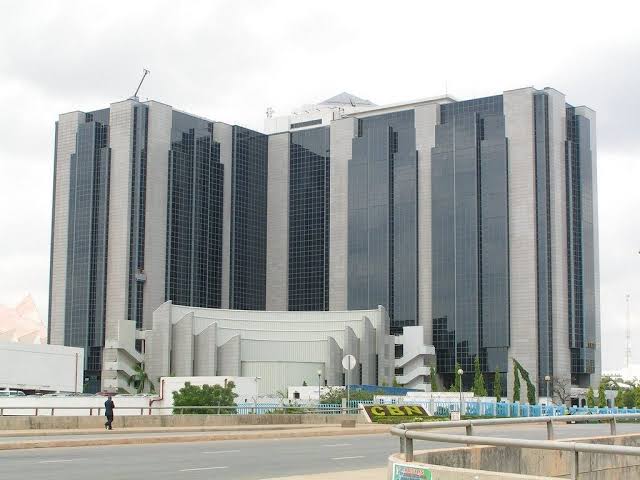
The Central Bank of Nigeria (CBN) has said its sweeping monetary and financial sector reforms are beginning to reset Nigeria’s economy, with inflation declining, foreign reserves rising, and investor confidence rebounding.
Speaking at the CBN Special Day at the 37th Enugu International Trade Fair, the Acting Director of corporate communications and investor relations, Sidi Hakama, said the Bank’s policies were delivering measurable outcomes.
“Our fight against inflation has been steadfast, headline inflation has dropped from a peak of 34.8 per cent in late 2024 to 15.06 per cent by the end of February 2026,” she said.
She added that the reforms had also triggered a surge in capital inflows and strengthened the country’s external reserves.
According to her, there has been “almost a 200 per cent increase in capital and investment inflows between 2023 and 2025; and an increase in external reserves from less than $10 billion to $50.45 billion.”
Hakama explained that the gains were driven by far-reaching reforms introduced under the leadership of CBN Governor, Olayemi Cardoso, including changes in the foreign exchange regime.
“The reforms have increased transparency and liquidity in the foreign exchange (FX) market, with a new FX manual removing many restrictive capital controls and simplifying trade and investment procedures,” she said.
She further disclosed that the Bank was transitioning to an inflation-targeting framework as part of efforts to sustain price stability.
The framework, she noted, is “a significant shift towards a more transparent, forward-looking, and rules-based monetary policy system anchored in long-term price stability,” adding that it would help shape market expectations and limit shocks.
On the banking sector, Hakama said the ongoing recapitalisation exercise was progressing well ahead of the March 31, 2026 deadline.
“As of March 17, 2026, 32 banks have met new capital requirements, with about 28 per cent of recapitalisation investments coming from foreign sources,” she said, describing it as a sign of renewed confidence in Nigeria’s financial system.
She also revealed that the reforms had earned global recognition, with the apex bank receiving the Central Bank of the Year 2026 Award.
The President of the Enugu Chamber of Commerce, Industry, Mines and Agriculture, Nnanyelugo Onyemelukwe, commended the CBN for restoring confidence in the financial system but warned that high interest rates could undermine the gains.
He noted that although the Monetary Policy Rate was recently reduced from 27.0 per cent to 26.5 per cent, borrowing costs were still too high.
“The interest rate needs to be brought down to a single-digit level. High cost of funds will continue to limit access to credit and negatively affect productivity and GDP,” Onyemelukwe added.